Wallet Ownership
Is There a Way to Find Out Who Owns a Crypto Wallet?
You cannot look up a name in a registry, but you can often find out who owns a crypto wallet from the clues it leaves behind. Here is what is possible, what is not, and how to check any address.
Free to search: see how much intelligence exists on an address. Unlock the full report to reveal the details.
373M+
Wallets tracked
1.1B+
Records indexed
100+
Intelligence sources
Can You Find Out Who Owns a Crypto Wallet?
The honest answer to whether you can find out who owns a crypto wallet is: often yes, sometimes no, and it depends entirely on the trail the wallet has left. Crypto wallets are pseudonymous, not anonymous. There is no central directory mapping addresses to people, but wallets constantly interact with the real world in ways that create attribution.
Every time a wallet deposits to a regulated exchange, gets reported by a scam victim, is tagged by an analyst, or appears in a leak, a new clue is added. A crypto wallet owner lookup gathers those clues from more than 100 intelligence sources and assembles the strongest available picture of who is behind an address.
This guide explains why wallets are traceable at all, the specific clues that reveal an owner, and the exact steps to check a wallet yourself. You can run a free search on any address at the top of this page and see how much attribution already exists.
What a Wallet Owner Lookup Surfaces
- Names & aliases Known identities and aliases that others have linked to the wallet address.
- Exchange links Deposits to KYC exchanges that can tie an address to a verified person.
- Scam reports Reports filed by other victims that corroborate who is behind an address.
- Sanctions & risk Whether the wallet appears on an OFAC, EU, or UN list or carries a risk label.
- Related wallets Clustered addresses the same owner is likely to control.
- Private lookups Your search is confidential and the wallet owner is never notified.
Why Crypto Wallets Are Pseudonymous, Not Anonymous
People assume crypto is anonymous. In reality it is pseudonymous: every transaction is permanently recorded on a public blockchain, tied to a wallet address rather than a name. That address is a pseudonym, and pseudonyms can be unmasked once they connect to identifiable activity.
The moment a wallet touches a KYC exchange, receives a labeled payment, or gets named in a report, the pseudonym starts leaking identity. Because the ledger is public and permanent, those connections do not disappear. They accumulate, which is why older wallets are usually easier to attribute than brand-new ones.
So finding out who owns a crypto wallet is rarely about cracking encryption. It is about collecting the real-world breadcrumbs a wallet has already dropped and reading them together.
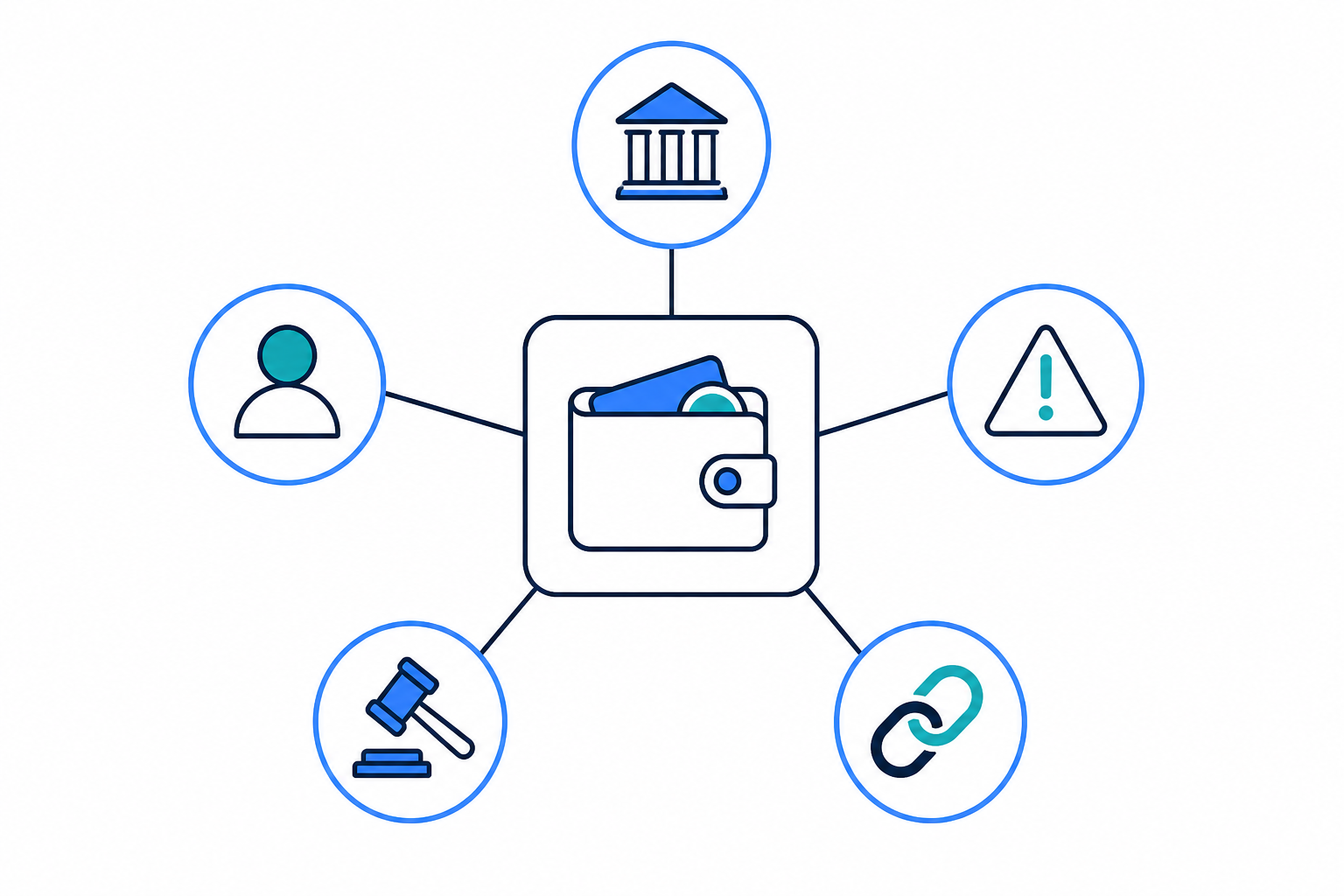
5 Clues That Reveal Who Owns a Crypto Wallet
First, exchange deposits. When a wallet sends funds to a centralized exchange, that exchange holds KYC data that can, with legal process, tie the address to a verified person.
Second, public labels and reports. Scam reports, OFAC sanctions listings, and analyst tags attach names, aliases, and categories to an address over time.
Third, social and forum footprints. People post their addresses to receive donations, sell items, or ask for help, linking a wallet to a username or profile. Fourth, related wallets, where clustering reveals other addresses the same owner controls. Fifth, leaks and investigations that name specific addresses.
How to Find Out Who Owns a Crypto Wallet, Step by Step
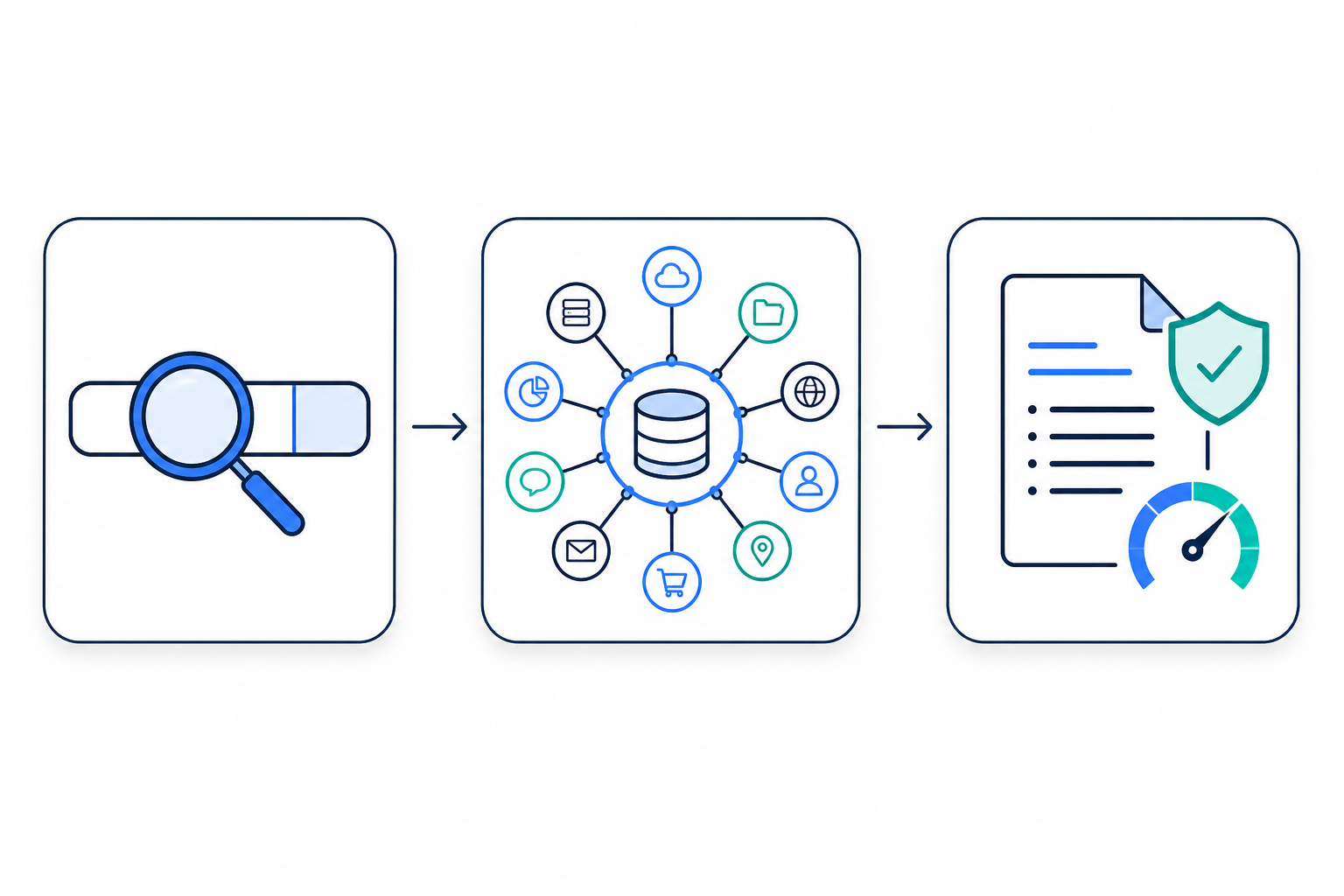
Step 1: Copy the full wallet address. Step 2: Run it through a crypto wallet owner lookup like the search at the top of this page. In seconds you will see how many data points exist and whether the wallet carries identity or risk labels.
Step 3: Read the summary. If attribution exists, the results indicate categories such as exchange links, scam reports, or sanctions. Step 4: Unlock the full report to reveal the actual names, connected accounts, and the entity map that ties everything together.
Step 5: Corroborate. Cross-check any names against the cited sources so you understand how strong the attribution really is before you act on it.
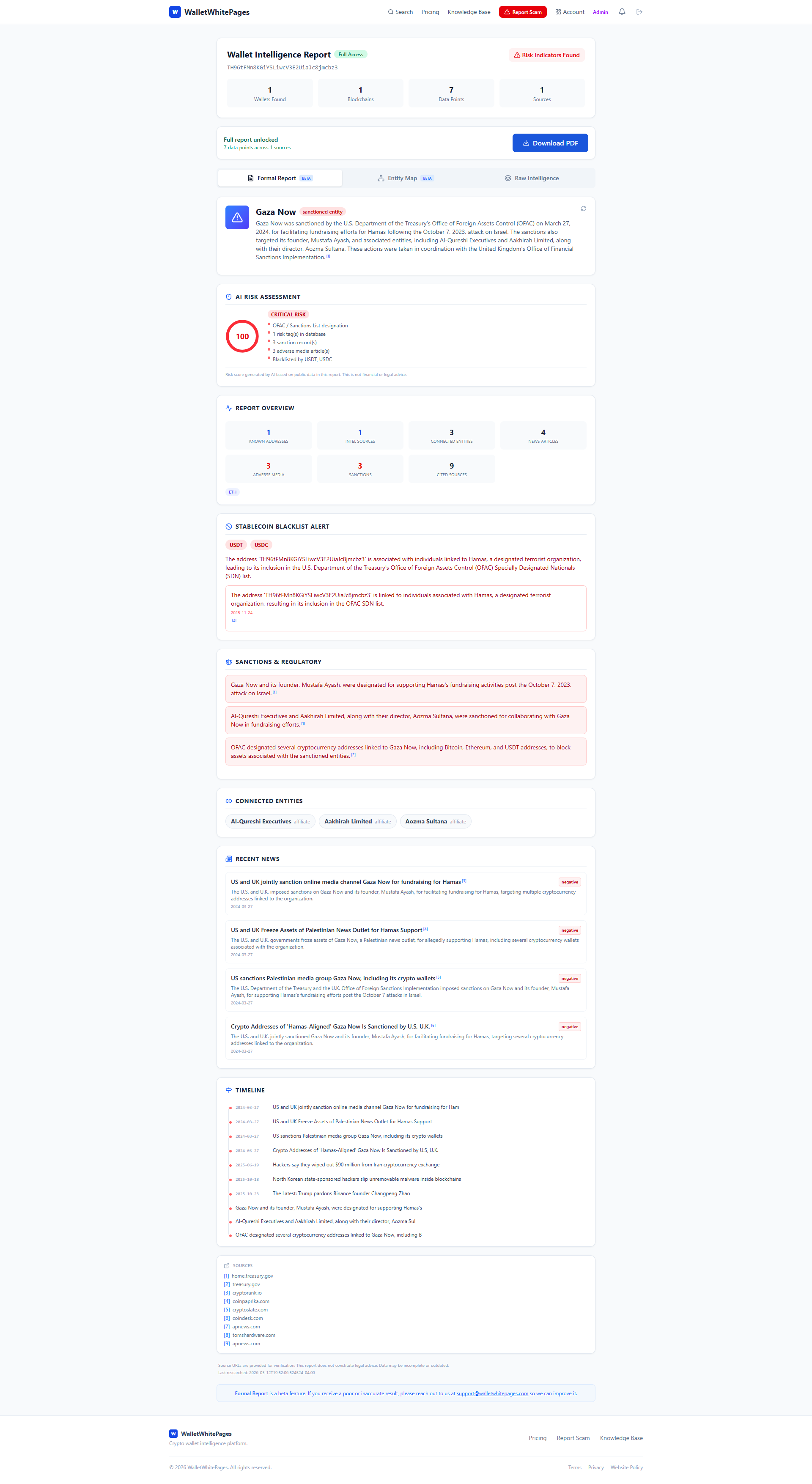
What a Full Report Reveals About a Wallet Owner
A free search tells you how much we know. The full report shows you what we know. Once unlocked, a report can surface known aliases and names, linked exchange and social accounts, scam and fraud reports filed by others, sanctions and risk labels, related wallets in the same cluster, and cited sources for each finding.
Together these turn an anonymous-looking string into a readable profile. For many people that is enough to make a confident decision, whether to avoid a counterparty, warn others, or start a case file.
Where certainty and legal weight matter, the next step is a professional investigation that can pursue exchange records and law-enforcement channels.
When You Can't Identify a Wallet (and What to Do Next)
Some wallets are genuinely dead ends today. A brand-new address that has only sent funds to a mixer, with no reports and no exchange contact, may have almost no attribution yet. That does not mean it never will.
Attribution grows over time as victims report, exchanges flag deposits, and analysts investigate. The best move for a currently unidentifiable wallet is to monitor it, so you are alerted the moment a name, label, or report attaches to it.
If the amount at stake is significant, a professional investigation can trace fund movements and pursue the identity through channels that are not available from a public lookup.
Who Tries to Identify a Wallet Owner
- Scam victims who want to find out who owns a crypto wallet that took their funds.
- Investors vetting the wallet behind a token, presale, or platform.
- Traders confirming a counterparty before a P2P or OTC deal.
- Investigators and journalists building a profile of an address.
- Anyone who received a suspicious payment request and wants the facts.
Frequently Asked Questions
Can you find out who owns a Bitcoin wallet specifically?
Often yes. Bitcoin transactions are fully public, so a BTC address can be linked to an identity when it deposits to a KYC exchange or gets reported. Our Bitcoin wallet identifier focuses on exactly these attribution clues.
Is it legal to look up who owns a crypto wallet?
Yes. A wallet address and its blockchain history are public, and aggregating public intelligence about an address is legal. The lookup is also confidential; the wallet owner is not notified.
Why do some wallets show no owner at all?
Because attribution has not been created yet. A new wallet with no exchange contact and no reports may have little public data. Monitoring it means you learn the moment that changes.
Is the crypto wallet address checker free?
Yes. Searching any crypto wallet address is free, on Bitcoin, Ethereum, and 50+ other chains. You can preview what we know about a wallet for free, and a free account or a Pro subscription unlocks the full identity report with the entity map and PDF export.
Will the wallet owner know I looked them up?
No. Every wallet lookup is completely private. We never notify, contact, or interact with the wallet owner, and your searches and watchlist stay confidential to your account.
Which blockchains can I look up?
Bitcoin, Ethereum, Tron, Solana, Litecoin, BNB Smart Chain, Polygon, XRP, Dogecoin, Avalanche, and more. Just paste the full wallet address to run the check.