Wallet Attribution
How Do We Know Whose Wallet It Is?
It's one of the most common questions in crypto: how do we know whose wallet it is when addresses are just strings of characters? Here is the plain-English answer, and how to check for yourself.
Free to search: see how much intelligence exists on an address. Unlock the full report to reveal the details.
373M+
Wallets tracked
1.1B+
Records indexed
100+
Intelligence sources
How Do We Know Whose Wallet It Is?
If addresses are anonymous strings, how do we know whose wallet it is? This exact question comes up constantly from newcomers, and the answer clears up one of the biggest misconceptions in crypto. Wallets are pseudonymous, not anonymous, and pseudonyms leak identity over time.
Nobody knows an owner because a blockchain stores their name; it does not. We know whose wallet it is because the wallet interacts with the real world, exchanges, victims, analysts, and public posts, and each interaction leaves a clue that can be pieced together.
This guide walks through those clues in plain language, references a popular community discussion of the same question, and shows how to check whose wallet an address might be using a free lookup.
What a Wallet Attribution Check Surfaces
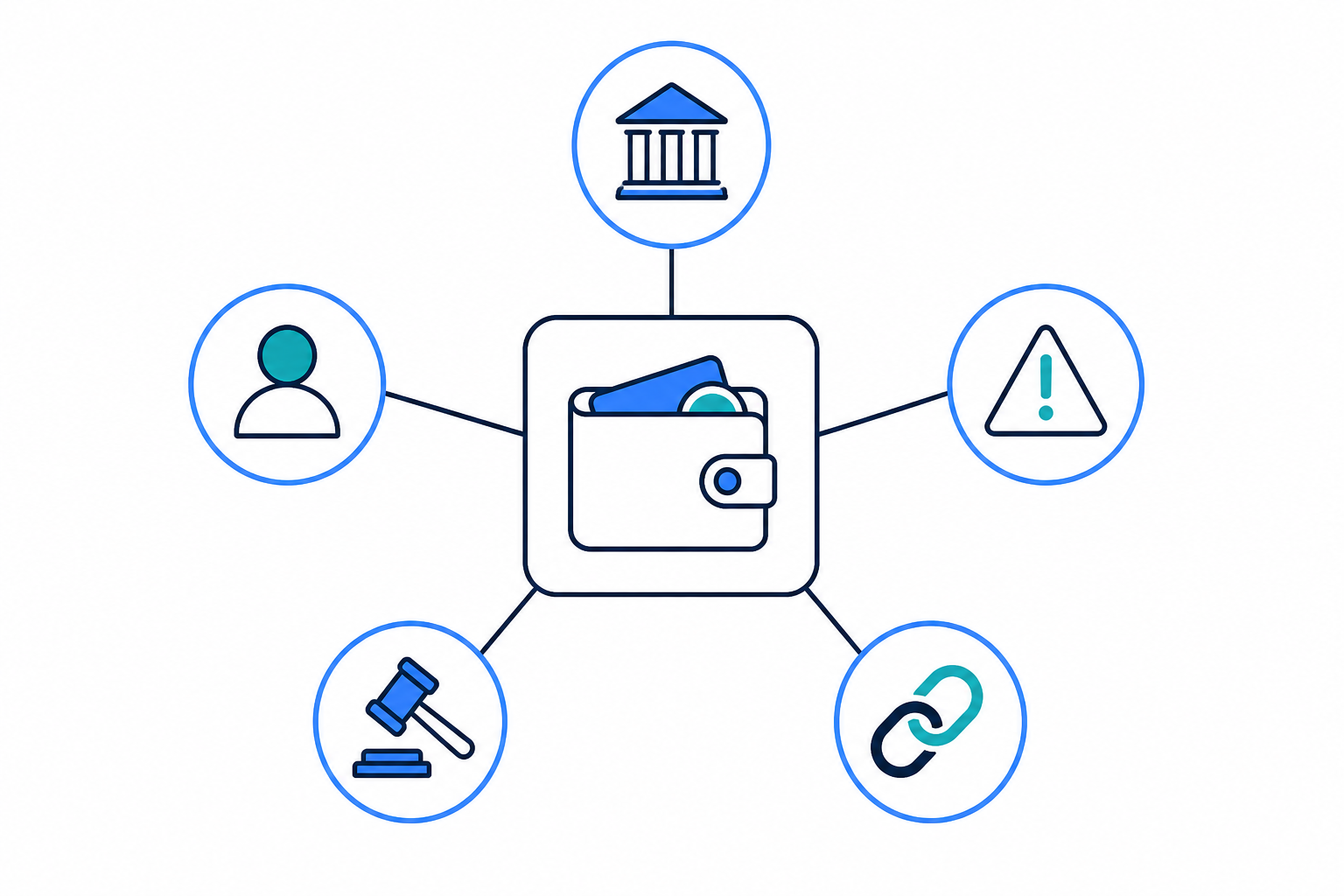
- Identity clues Names, aliases, and accounts linked to the address.
- Exchange links KYC exchange deposits that can connect a wallet to a person.
- Scam reports Community reports naming the same address.
- Sanctions & risk Whether the wallet is sanctioned or flagged.
- Related wallets Clustered addresses controlled by the same owner.
- Private checks Your lookup is confidential; the owner is never notified.
The Short Answer: Attribution, Not a Name Registry
There is no master list that maps wallet addresses to names. Instead, ownership is inferred through attribution: connecting an address to identifiable activity until a confident picture emerges.
Think of it like a phone number with no name attached. On its own it tells you nothing, but the moment that number appears on a receipt, a social profile, or a police report, it starts to connect to a person. Wallet addresses work the same way.
So "how do we know whose wallet it is" is really asking "what has this address done that ties it to someone real?" Usually, the answer is more than people expect.
The Clues That Tie a Wallet to a Person
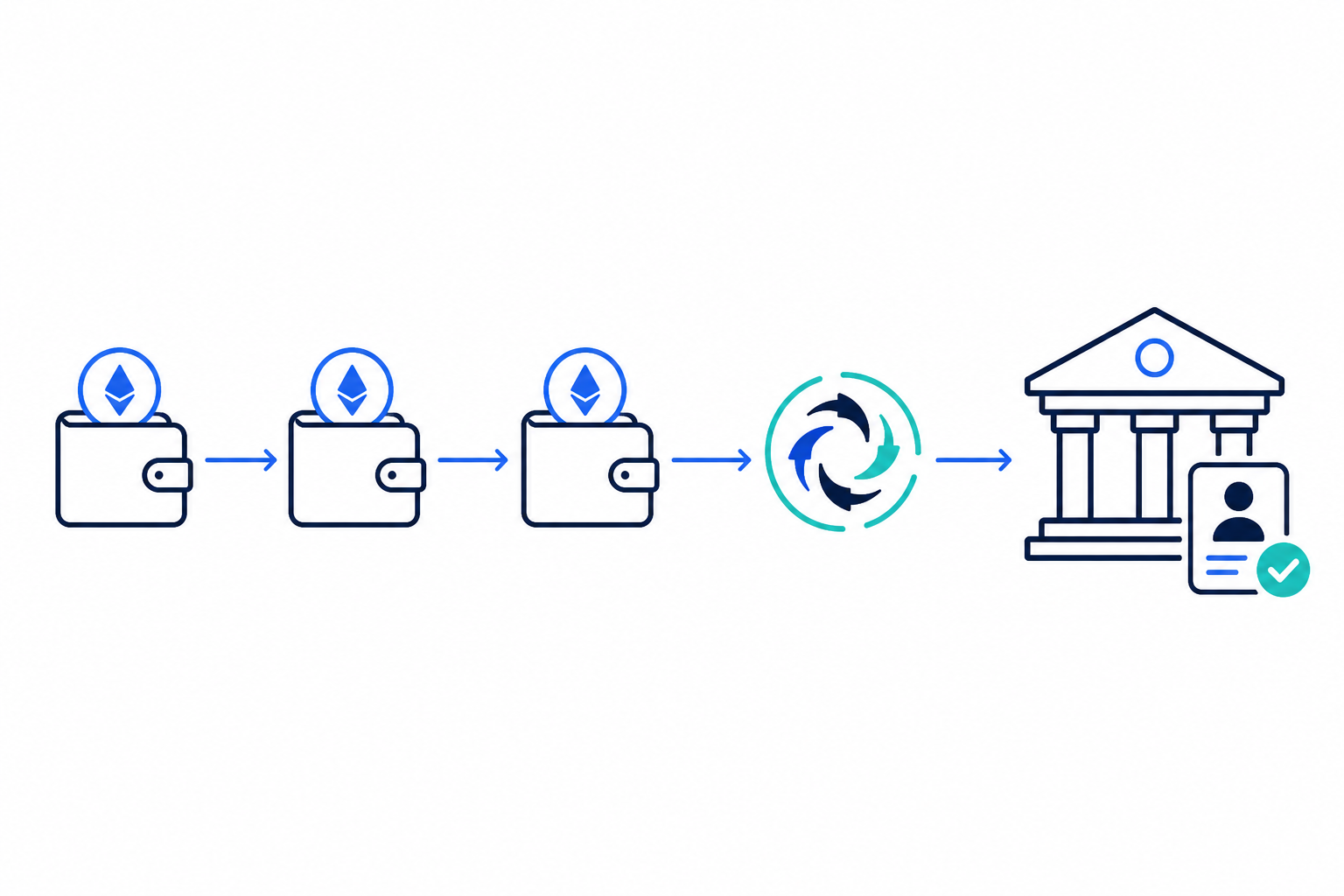
The strongest clue is an exchange deposit. Centralized exchanges verify identity, so a wallet that funds an exchange account can be tied to a verified person through legal process.
Other clues stack on top: scam reports naming the address, OFAC sanctions listings, analyst labels, social posts where someone shares their wallet, and clustering that groups addresses controlled by the same owner.
No single clue is proof, but together they build confidence. A wallet with a dozen consistent clues is far easier to attribute than one with none.
How Exchanges and KYC Break the Anonymity Myth
The myth that "crypto is untraceable" survives because a bare address really does look anonymous. What breaks the myth is know-your-customer (KYC) regulation.
To convert crypto to cash, most people use a regulated exchange that collects ID, proof of address, and banking details. When funds reach that chokepoint, the anonymity ends: the exchange knows exactly who withdrew the money.
This is why even sophisticated theft cases are often solved. The funds may hop across wallets, but they usually need a regulated off-ramp eventually, and that off-ramp holds an identity.
A Common Question From the Crypto Community
This is not just a beginner worry; it is asked openly in large communities. In a widely read r/BitcoinBeginners thread titled "how do we know whose wallet it is," newcomers ask exactly this, and experienced users explain the same thing this guide does: wallets are pseudonymous, and identity emerges through exchange KYC, reports, and analysis.
The community consensus is reassuring for victims and sobering for bad actors. You usually cannot instantly name a random wallet, but with the right clues and process, many wallets can be attributed.
You can read the original discussion in the sources below, then check any address yourself with the free lookup on this page.
How to Check Whose Wallet an Address Might Be
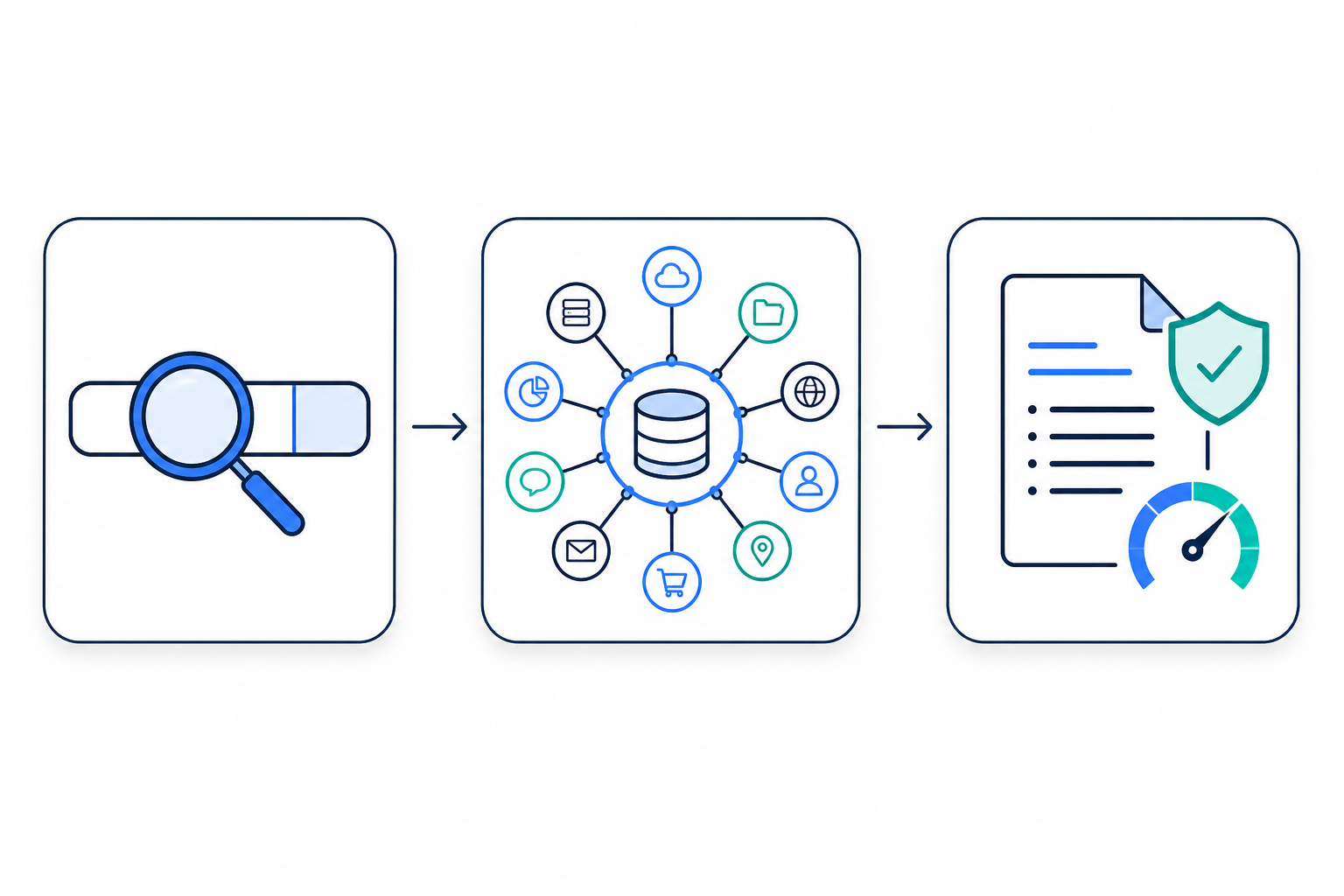
Step 1: Copy the address in question. Step 2: Paste it into the checker at the top of this page. In seconds you will see how much attribution exists and whether the wallet carries identity or risk labels.
Step 3: Read the summary to gauge how identifiable the wallet is. Step 4: Unlock the full report to see the actual names, connected accounts, and the entity map behind the clues.
If little exists yet, monitor the wallet so you are alerted the moment new attribution appears. Ownership clues tend to grow over time.
Who Asks Whose Wallet It Is
- Newcomers trying to understand how crypto privacy really works.
- Victims wanting to know whose wallet received their funds.
- Buyers and sellers verifying a counterparty address.
- Researchers and journalists attributing on-chain activity.
- Anyone handed an address and asked to trust it.
Frequently Asked Questions
How do we know whose wallet it is if addresses are anonymous?
Addresses are pseudonymous, not anonymous. We attribute a wallet by connecting it to identifiable activity, exchange KYC deposits, scam reports, analyst labels, social posts, and clustering, until a confident picture of the owner emerges.
Can anyone see who owns a wallet?
Anyone can see a wallet's public transactions, but the owner's name is not on-chain. Identifying the owner requires attribution clues and, for legal certainty, records held by exchanges at cash-out chokepoints.
How do I check whose wallet an address is?
Paste the address into the checker on this page. A free search shows how much attribution exists; unlocking the report reveals the names, connected accounts, and entity map behind it.
Is the crypto wallet address checker free?
Yes. Searching any crypto wallet address is free, on Bitcoin, Ethereum, and 50+ other chains. You can preview what we know about a wallet for free, and a free account or a Pro subscription unlocks the full identity report with the entity map and PDF export.
Will the wallet owner know I looked them up?
No. Every wallet lookup is completely private. We never notify, contact, or interact with the wallet owner, and your searches and watchlist stay confidential to your account.
Which blockchains can I look up?
Bitcoin, Ethereum, Tron, Solana, Litecoin, BNB Smart Chain, Polygon, XRP, Dogecoin, Avalanche, and more. Just paste the full wallet address to run the check.