Crypto Recovery
How to Recover Lost or Stolen Cryptocurrency.
A calm, realistic guide to how to recover stolen cryptocurrency: what to do in the first 24 hours, how to trace the funds, how to report it, and when a professional investigation is worth it.
Free to search: see how much intelligence exists on an address. Unlock the full report to reveal the details.
373M+
Wallets tracked
1.1B+
Records indexed
100+
Intelligence sources
How to Recover Lost or Stolen Cryptocurrency
Learning how to recover stolen cryptocurrency starts with a hard truth and a hopeful one. The hard truth: not every case is recoverable, and anyone who guarantees your money back is lying. The hopeful one: many cases are traceable, and tracing quickly is what creates the chance of recovery.
Whether your crypto was stolen in a scam, a hack, or a drained wallet, the same fundamentals apply. Act fast, preserve evidence, trace the funds toward a regulated chokepoint, report to the right authorities, and get an honest assessment of whether recovery is realistic.
This guide walks through each step in order. You can also paste the destination wallet into the free checker on this page right now to see whether it is already linked to an identity, an exchange, or prior reports.
Your Recovery Toolkit
- Check the wallet free See whether the destination address is already linked or reported.
- Identity leads Surface exchange links and identities tied to the thief's wallet.
- Monitor for changes Get alerted the moment new attribution appears on the wallet.
- Evidence you can keep Save a profile to share with police, exchanges, or counsel.
- Professional tracing Escalate to Glacier21 for law-enforcement-grade investigation.
- Honest assessment A realistic opinion on whether recovery is actually possible.
First 24 Hours: What to Do Right After Crypto Is Stolen
Move fast, but do not panic. First, secure everything: if a wallet was compromised, move any remaining funds to a new, secure wallet and revoke suspicious token approvals. Change passwords and enable strong two-factor authentication on your exchange and email.
Second, stop the bleeding. Cut off contact with the scammer and do not send "release fees" or "taxes" to get your money back; that is a second scam.
Third, write down the destination wallet address and every transaction ID now, while it is fresh. The faster the funds are identified, the more leads stay live.
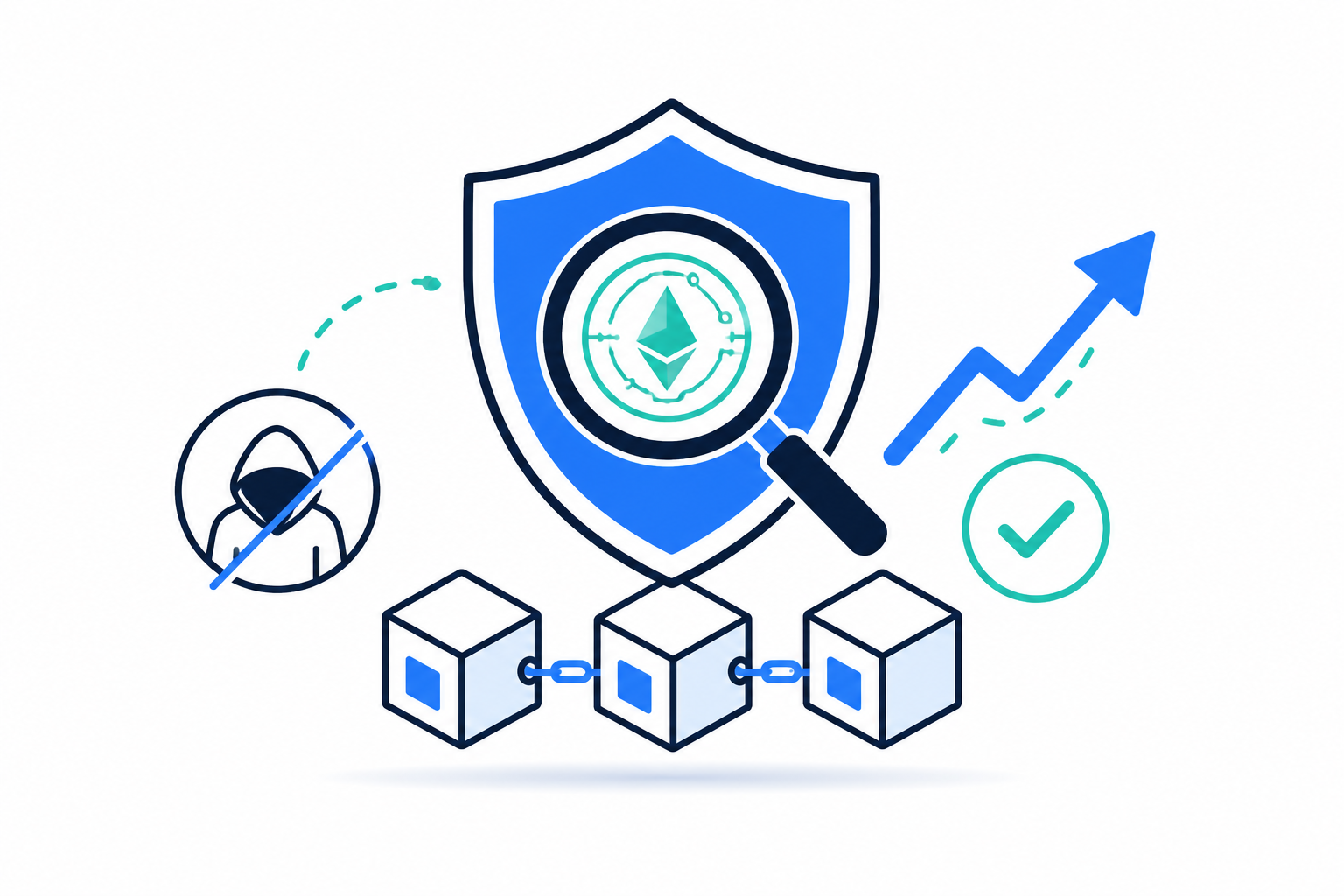
Document Everything: Building Your Evidence
Recovery and reporting both depend on evidence. Save the destination wallet addresses, transaction hashes, amounts, dates, and the blockchain each used. Screenshot every message, profile, website, and payment request from the scammer.
Keep a simple timeline of what happened and when. If a fake platform was involved, record its URL, any account numbers, and the names or handles used.
This record is what an investigator, exchange, or law enforcement agency will need. Looking up the destination wallet adds ongoing intelligence to that file.
Trace the Funds: Following Stolen Crypto On-Chain
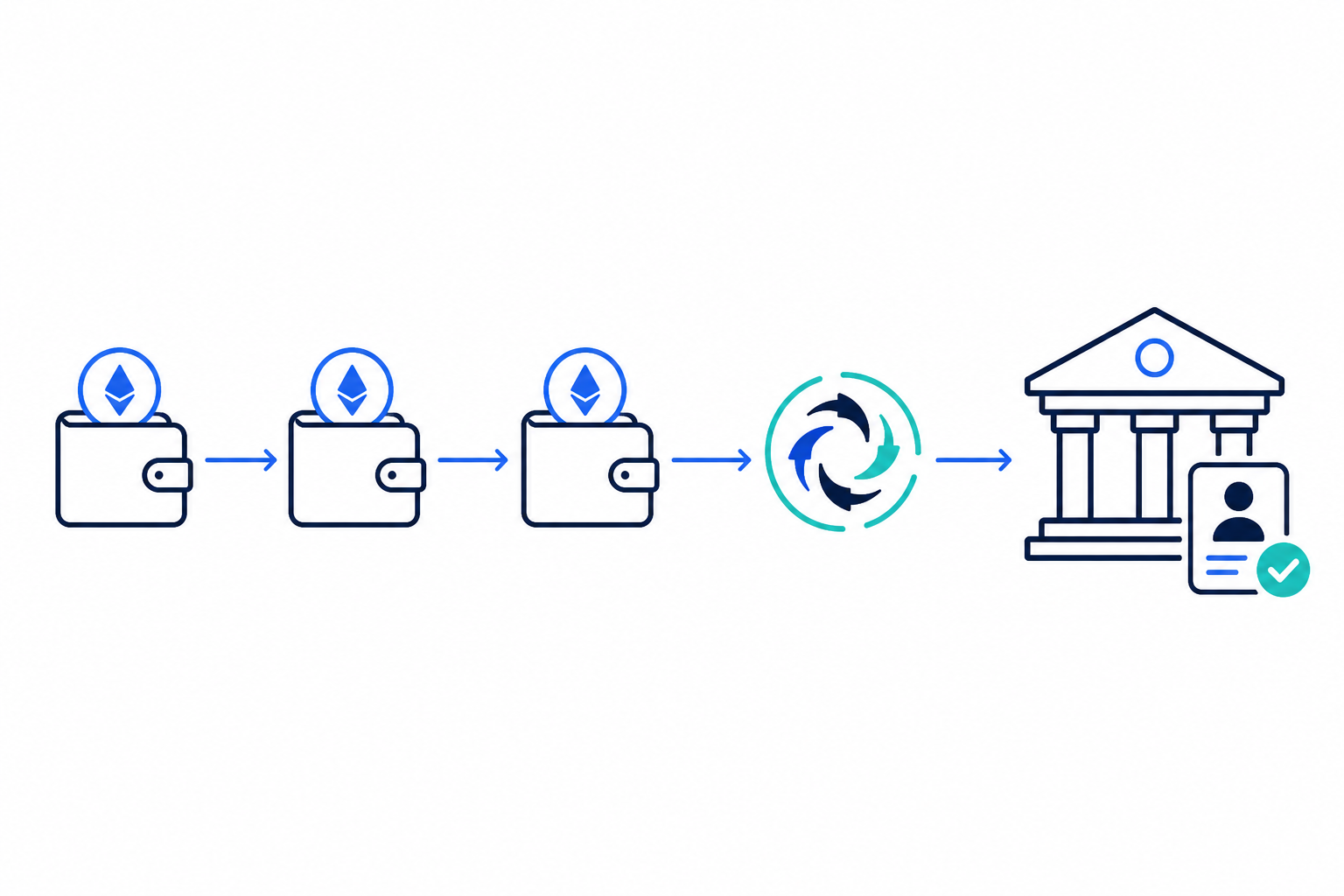
Because blockchains are public, stolen funds can be followed from your wallet to wherever they went next using blockchain analysis. Tracing maps that flow and looks for the chokepoints, exchanges and services that perform KYC, where the thief may cash out.
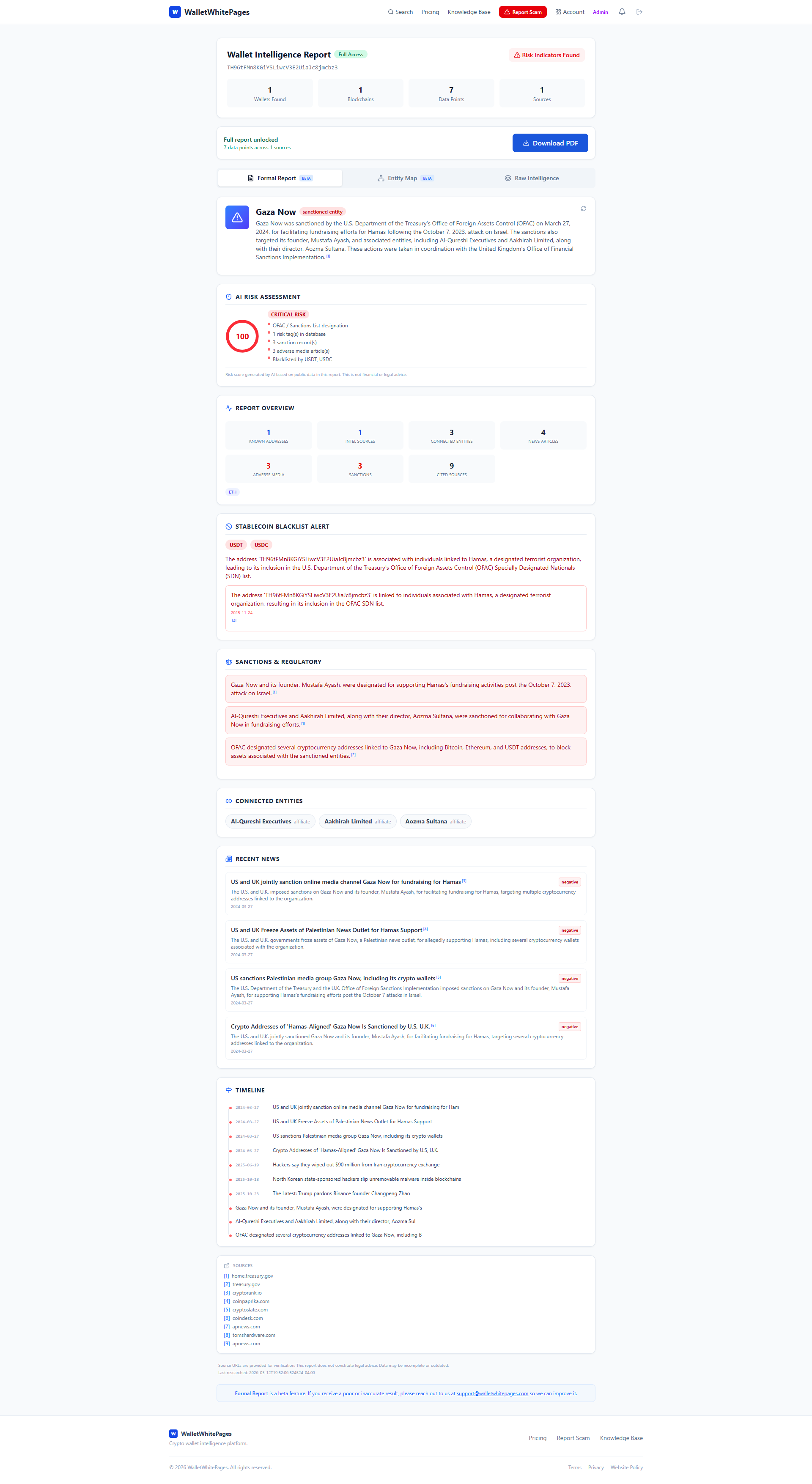
Start by checking the destination wallet with the free lookup on this page. If it already links to an exchange, carries scam reports, or is sanctioned, that is a strong lead.
Full tracing across mixers, bridges, and clusters is where professional tools and investigators add the most value, especially for larger losses.
Report It: Exchanges, Police, and IC3
Reporting fast improves your odds. If the funds landed at an exchange, contact its support and compliance team immediately with the transaction details; exchanges can sometimes freeze funds tied to fraud.
File a report with your local police and, in the U.S., with the FBI Internet Crime Complaint Center (IC3). Include your evidence file and the destination wallet address. These reports can enable freezes, subpoenas, and coordinated action.
Reporting the wallet on WalletWhitePages also adds a community signal that helps other victims and strengthens attribution over time.
When to Use a Professional Recovery Investigation
For significant losses, a professional investigation is often the difference between guessing and knowing. Our parent company Glacier21 employs former FBI and DOJ investigators for law-enforcement-grade blockchain tracing.
A preliminary investigation traces your funds, identifies key leads and entities, and gives an honest opinion on whether recovery is realistic, before you spend more chasing it.
Crucially, a legitimate firm will tell you when a case is not recoverable. That honesty saves you from throwing good money after bad.
Avoiding Recovery Scams
Sadly, "recovery" is itself a scam category that targets victims a second time, a pattern documented alongside pig-butchering scams. Be extremely skeptical of anyone who contacts you first, guarantees recovery, or asks for a large upfront fee to "unlock" or "release" your funds. Compare real stolen crypto recovery services before you pay.
Legitimate investigators use real, verifiable names, offer a video call, and are cited in independent press. They never promise a specific outcome.
If in doubt, verify before you pay a cent, and never share your seed phrase or private keys with anyone claiming they need them to recover your money.
Who This Guide Is For
- Victims of investment, romance, or pig-butchering scams.
- People whose wallet was drained by a malicious approval or phishing.
- Businesses hit by payment redirection or invoice fraud.
- Anyone who sent crypto to a fake exchange or "trading platform".
- People deciding whether a professional recovery investigation is worth it.
Frequently Asked Questions
How do I recover stolen cryptocurrency?
Act fast: secure your accounts, document everything, trace the destination wallet, and report to the exchange involved and to the FBI IC3. Then get an honest assessment of whether recovery is realistic. Start by checking the destination wallet with the free lookup on this page.
Is it possible to recover lost or stolen cryptocurrency?
Sometimes. Recovery is most realistic when funds are traced quickly to a regulated exchange that can freeze them, or when law enforcement acts early. Many cases are not recoverable, which is why tracing first, to learn what is possible, matters so much.
Can stolen cryptocurrency really be recovered?
Sometimes, but not always. Recovery is most realistic when funds are traced quickly to a regulated exchange that can freeze them, or when law enforcement gets involved early. Many cases are not recoverable, and any service that guarantees your money back is a red flag. The honest first step is tracing the funds to learn whether recovery is even possible.
How much does crypto recovery cost?
It varies. Legitimate investigators typically charge for their time and tools, often as a fixed preliminary investigation fee, not a large percentage promised against "guaranteed" recovery. Glacier21 offers a one-time preliminary investigation that traces your funds and tells you honestly whether recovery is realistic before you spend more.
How do I avoid crypto recovery scams?
Never trust anyone who guarantees recovery, asks for large upfront fees to "release" funds, or contacts you first claiming they can hack money back. Recovery scams specifically target people who were already victimized. Verify real names, look for a video call with named investigators, and check independent press coverage before paying anyone.