Wallet Tracing
Can a Crypto Wallet Be Traced to the Owner?
Yes, more often than people think. Learn how a crypto wallet can be traced to the owner, what makes tracing harder, and how to check whether an address is already linked to an identity.
Free to search: see how much intelligence exists on an address. Unlock the full report to reveal the details.
373M+
Wallets tracked
1.1B+
Records indexed
100+
Intelligence sources
Can a Crypto Wallet Be Traced to the Owner?
The question of whether a crypto wallet can be traced to the owner comes up after almost every scam, and the answer surprises people: yes, far more often than the "crypto is untraceable" myth suggests. Every Bitcoin and Ethereum transaction is recorded on a permanent, public ledger that anyone can read and that blockchain analysis tools index.
Tracing follows the money across that ledger from wallet to wallet. It becomes powerful at the points where crypto meets the regulated world, the exchanges and services that verify identity. That is where a pseudonymous address can connect to a real, named person.
This guide explains how blockchain tracing actually works, where wallets get linked to identities, what techniques make tracing harder, and how to check whether the wallet you care about is already traceable today.
What Tracing a Wallet Can Reveal
- Fund-flow context Whether an address connects to exchanges, mixers, or flagged clusters.
- Exchange chokepoints Links to KYC services where an identity can be requested.
- Identity clues Names, aliases, and social profiles tied to the traced wallet.
- Sanctions & risk Whether the wallet is sanctioned or carries a risk label.
- Scam reports Reports from other victims that corroborate a case.
- Investigation-ready A profile you can hand to investigators, exchanges, or counsel.
How Blockchain Tracing Actually Works
A blockchain is a shared public record of every transaction. Because addresses and amounts are visible to everyone, investigators can follow a specific coin or token as it moves from one wallet to the next, building a map of the flow of funds.
On top of the raw ledger, analysts add labels: this cluster belongs to a known exchange, that address was reported for a scam, this one is sanctioned. Combining the money trail with these labels is what turns tracing from a maze of hex strings into a readable story.
The trail is permanent. Even years later, funds can be followed, which is why stolen crypto sometimes surfaces long after the theft.
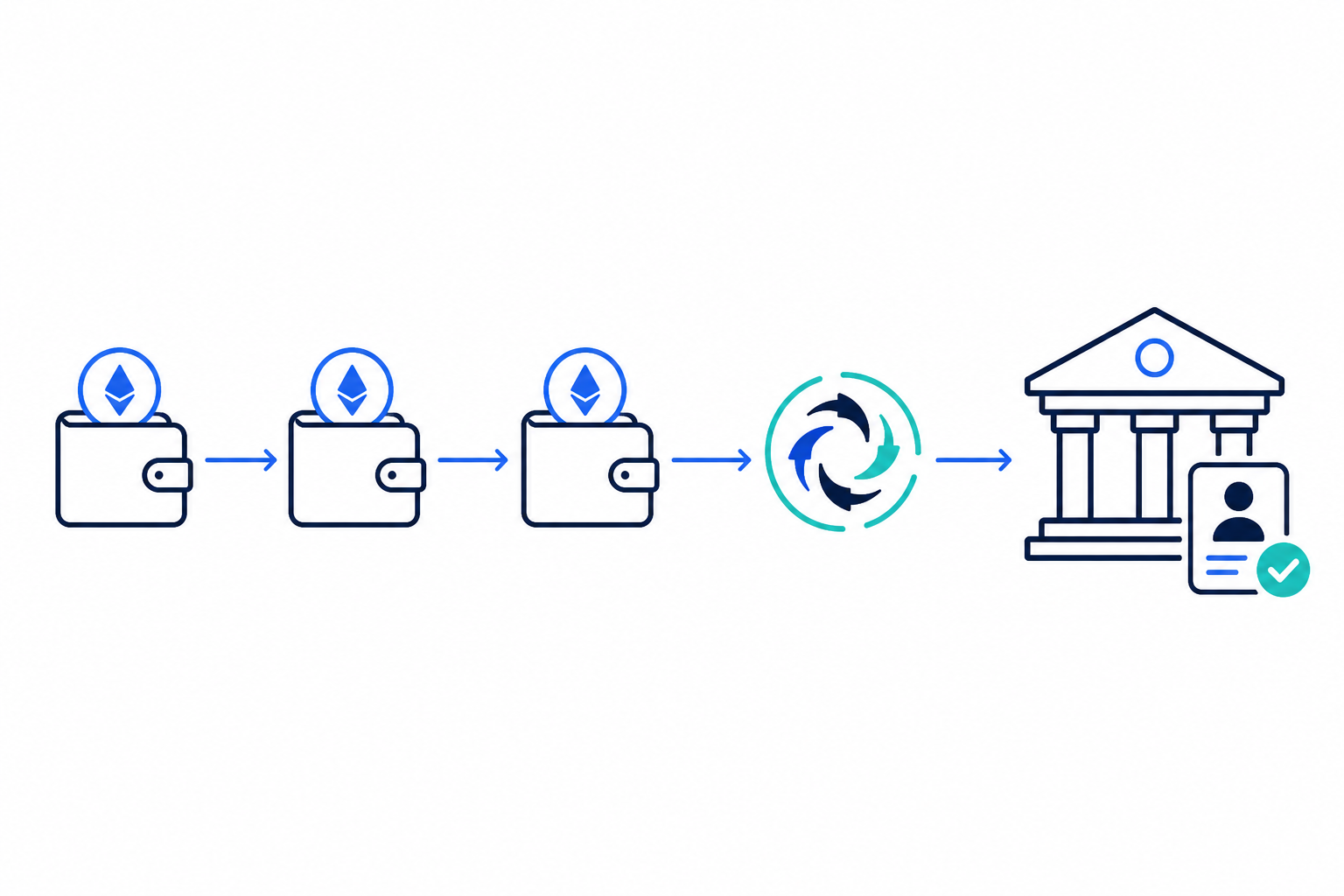
Exchange Chokepoints: Where Wallets Meet Real Identities
The single most important concept in tracing is the chokepoint. To turn crypto into cash, most people eventually use a centralized exchange or an on- and off-ramp. These businesses are regulated and perform know-your-customer (KYC) checks, so they hold the verified identity behind a deposit address.
When traced funds land at such a chokepoint, law enforcement or a lawyer can request the account records tied to that deposit. That is the moment a wallet is traced to the owner in a way that stands up in the real world.
A crypto wallet checker helps before you ever get to that stage by showing whether an address already has exchange links, labels, or reports attached to it.
What Makes a Wallet Harder (Not Impossible) to Trace
Some tools are built to break the trail. Mixers and tumblers pool many users' funds together to obscure the link between source and destination. Cross-chain bridges and chain-hopping move value between blockchains to complicate the path. Privacy coins add cryptographic shielding.
These techniques make tracing harder, but rarely impossible. Using a mixer is itself a red flag that many exchanges and analysts watch for, and modern tools can often see through or around common laundering patterns.
In practice, most scam and theft cases do not use flawless operational security. Funds usually touch a traceable service somewhere, which is exactly what an investigation looks for.
How to Check Whether a Wallet Is Already Traceable
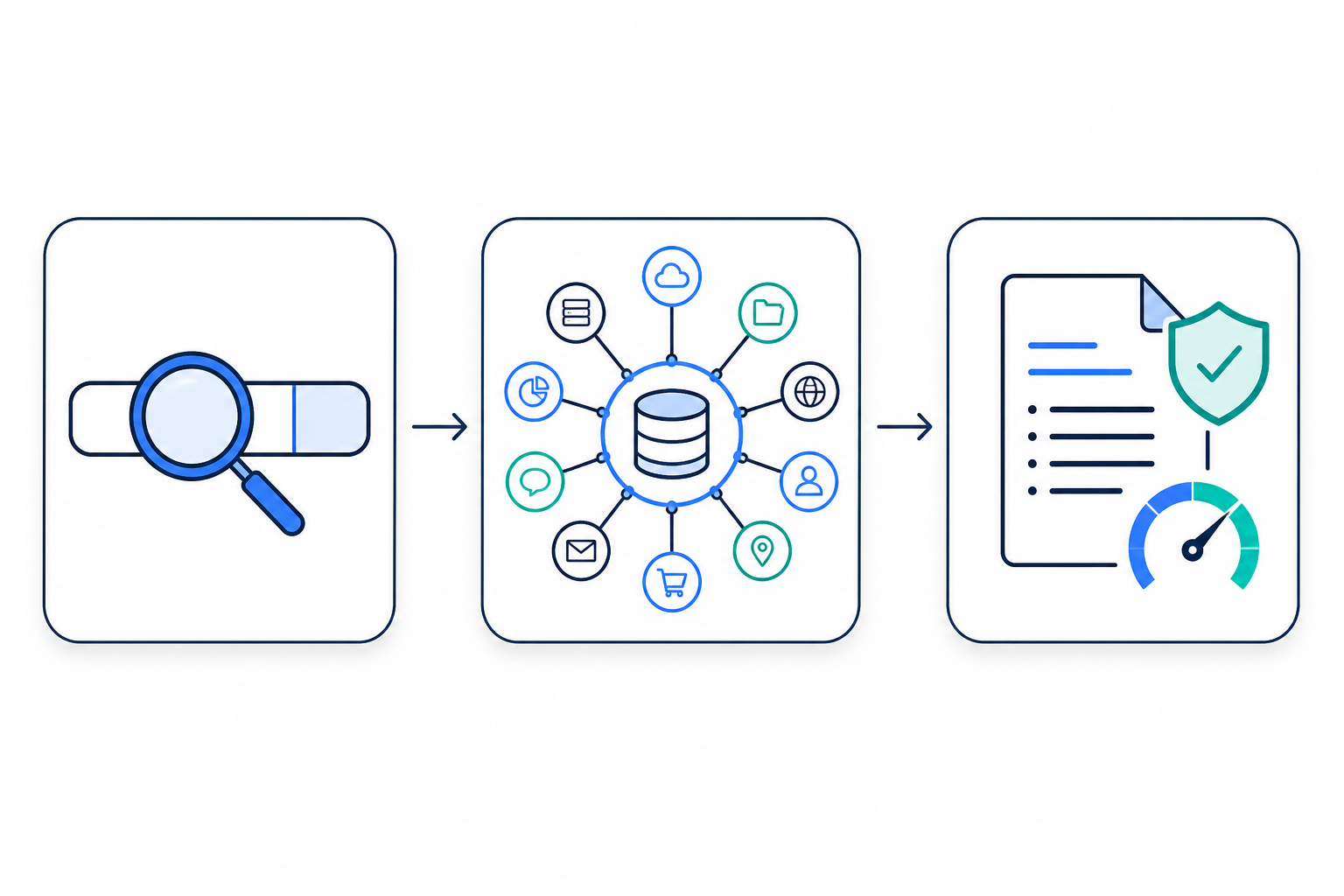
You do not need to be an analyst to get a head start. Paste any address into the checker at the top of this page and you will instantly see how much intelligence exists on it: exchange links, reports, sanctions, and risk labels.
If the summary shows strong attribution, the wallet is likely traceable to an identity with the right process. If it shows little, the trail may need active tracing to develop. Either way, you learn where you stand in seconds.
Unlock the full report to see the specific connections, or monitor the wallet so you are alerted as new, traceable links appear over time.
From Traceable Clues to a Full Investigation
A lookup tells you whether a wallet is traceable. Acting on it, freezing funds at an exchange, pursuing records, or preparing a case, usually requires a professional.
Our parent company Glacier21 provides law-enforcement-grade tracing led by former FBI and DOJ investigators. A preliminary investigation follows the funds, identifies key leads and entities, and gives an honest opinion on whether recovery is realistic.
If money is already gone, tracing quickly matters, because funds move fast and the sooner the trail is followed, the more leads stay live.
When People Ask if a Wallet Can Be Traced
- After a scam, to learn whether stolen crypto can be followed and recovered.
- Before a deal, to see whether a counterparty wallet is clean or flagged.
- During due diligence on a token, platform, or fund.
- While building a legal or insurance case that needs documented evidence.
- Out of caution, before sending a large amount to an unfamiliar address.
Frequently Asked Questions
Is Bitcoin really traceable?
Yes. Bitcoin is pseudonymous, not anonymous. Every transaction is on a public ledger, and BTC is often traceable to an identity once it touches a KYC exchange or gets reported. Our Bitcoin wallet identifier surfaces those links.
Can police trace a crypto wallet?
Yes. Law enforcement uses blockchain tracing plus legal process to request records from exchanges at the chokepoints where funds are cashed out. Tracing the wallet first, and reporting to the FBI IC3, helps that process.
Does using a mixer make a wallet untraceable?
It makes tracing harder, not automatically impossible. Mixer use is itself a red flag, and analysts can often see through common patterns. Most cases still touch a traceable service at some point.
Is the crypto wallet address checker free?
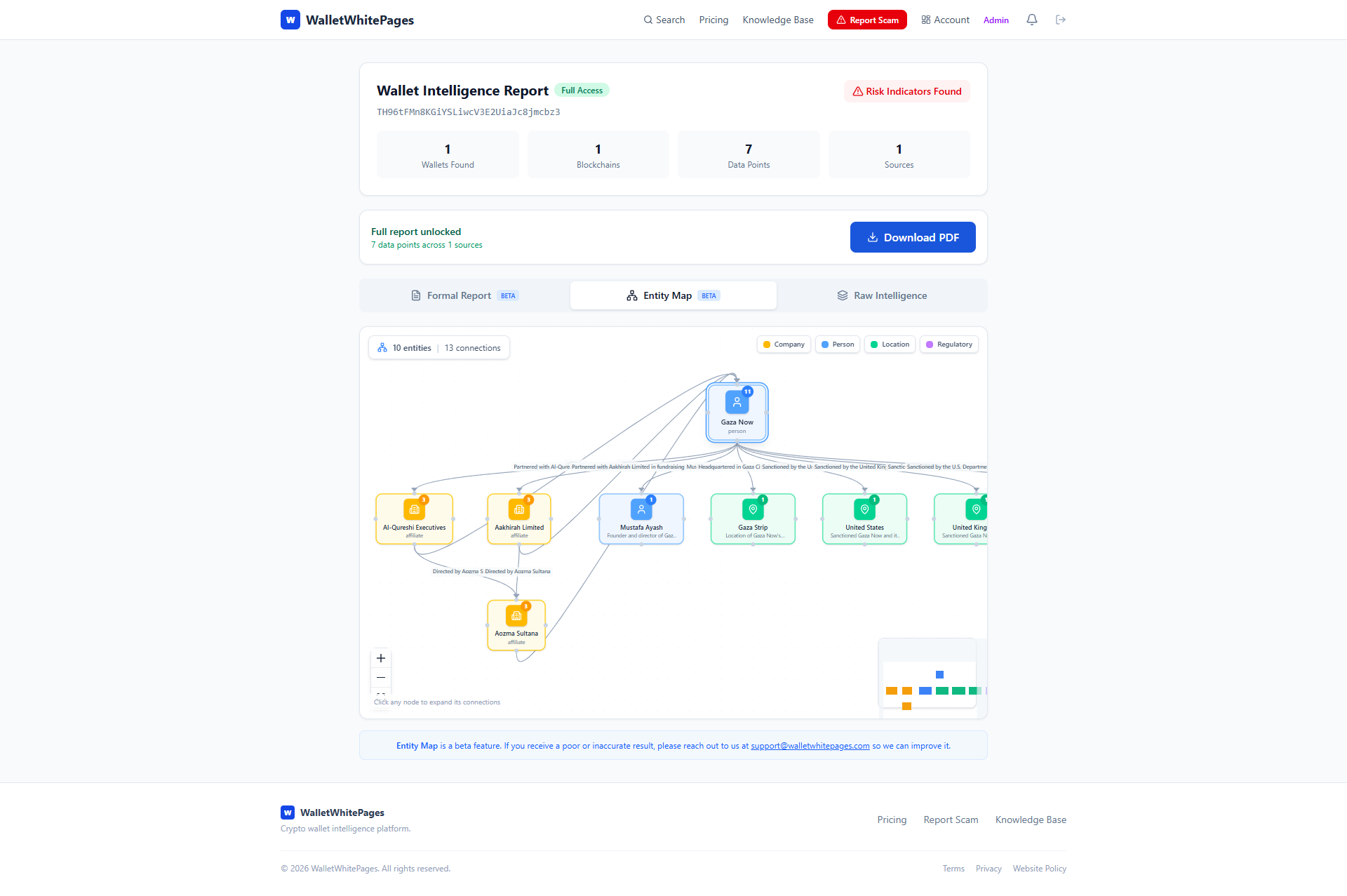
Yes. Searching any crypto wallet address is free, on Bitcoin, Ethereum, and 50+ other chains. You can preview what we know about a wallet for free, and a free account or a Pro subscription unlocks the full identity report with the entity map and PDF export.
Will the wallet owner know I looked them up?
No. Every wallet lookup is completely private. We never notify, contact, or interact with the wallet owner, and your searches and watchlist stay confidential to your account.
Which blockchains can I look up?
Bitcoin, Ethereum, Tron, Solana, Litecoin, BNB Smart Chain, Polygon, XRP, Dogecoin, Avalanche, and more. Just paste the full wallet address to run the check.